

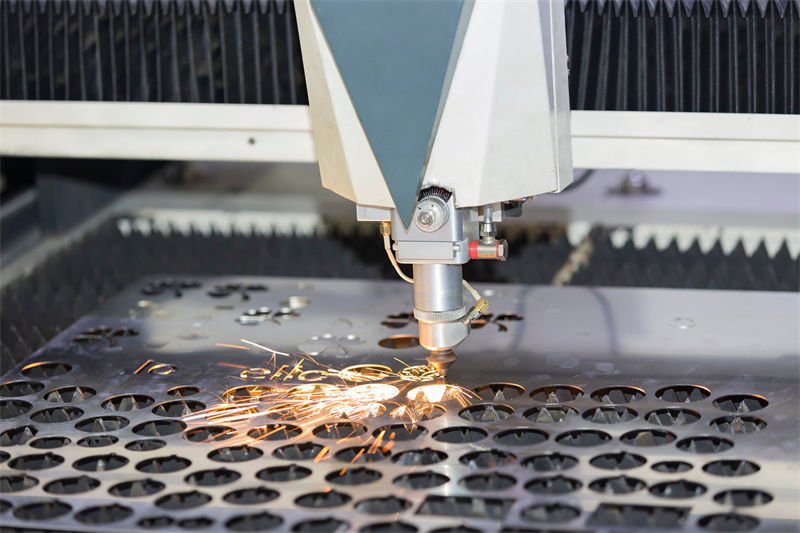
In my journey through the world of laser cutting, I’ve discovered a fascinating contrast between cutting wood and metals. Each material requires a unique approach, and understanding these differences can make all the difference in your projects.
Laser cutting wood typically uses CO2 lasers, requiring less power, with a process of burning and vaporizing the material. In contrast, metals are cut using fiber lasers, needing higher power to melt the material, which is then removed by assist gas.
Let’s explore these distinctions further, as they hold valuable insights for anyone considering laser cutting machines for various applications.
CO2 lasers are used for cutting wood.True
CO2 lasers, with a longer wavelength, efficiently cut wood by burning.
How Do Laser Types Differ for Wood and Metal Cutting?
Laser cutting technology offers precision and versatility, but the approach varies for wood and metal.
CO2 lasers are ideal for cutting wood due to their wavelength, while fiber lasers, with a shorter wavelength, are better suited for metal cutting.
Understanding Laser Wavelengths
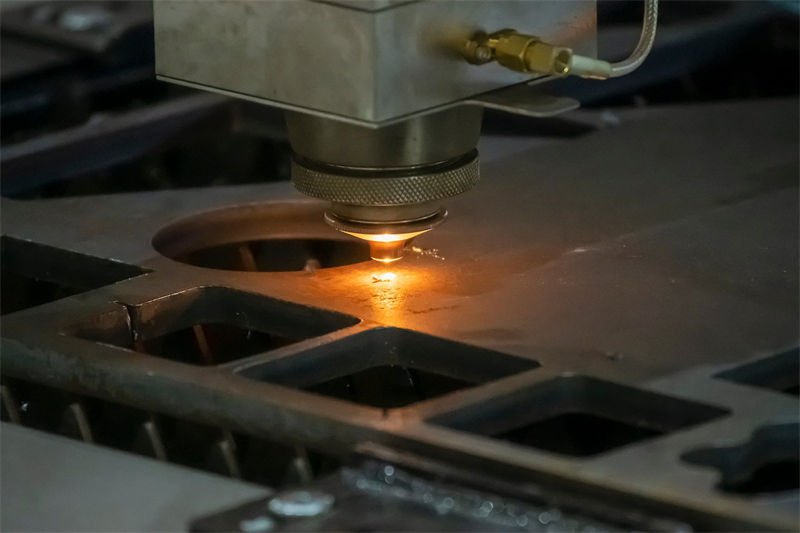
One of the primary distinctions between laser types used for wood and metal cutting lies in their wavelengths. CO2 lasers, which are commonly used for cutting wood, operate at a wavelength of around 10,600 nm. This longer wavelength is effectively absorbed by organic materials like wood, making it efficient for burning and vaporizing the material. On the other hand, fiber lasers have a much shorter wavelength of approximately 1,060 nm, which is ideal for cutting metals. The shorter wavelength allows fiber lasers to focus energy more precisely, creating the necessary heat to melt and cut through metal efficiently.
Power Requirements and Efficiency
The power requirements also differ significantly between these laser types. Wood typically requires less power to cut because the material is more easily vaporized by the CO2 laser. In contrast, metals require higher-powered fiber lasers to generate enough heat to melt through the denser material. This difference in power needs not only impacts the choice of laser type but also influences the cost and energy consumption of the cutting process.
Cutting Mechanisms
While both laser types use intense beams to cut materials, the mechanisms differ slightly. For wood, the process involves burning and vaporizing the material, often resulting in charred edges. This process can be enhanced by using compressed air as an assist gas to clear away debris. In metal cutting, the laser melts the material, and an assist gas like nitrogen or oxygen blows away the molten metal. The choice of assist gas can also affect edge quality—using oxygen with ferrous metals can speed up cutting by increasing oxidation.
Safety and Environmental Considerations1
Safety is another crucial factor when choosing between CO2 and fiber lasers. Wood cutting can produce significant amounts of smoke and potentially flammable debris, necessitating proper ventilation systems. Conversely, metal cutting might release harmful fumes, especially from certain alloys, requiring specialized ventilation solutions. Understanding these environmental impacts is essential for maintaining safe and sustainable operations.
Applications and Material Limitations2
CO2 lasers are highly versatile for various wood applications, including engraving and cutting thicker sections. However, they have limitations when it comes to metals, especially thicker non-ferrous ones. Fiber lasers excel with metals and allow for precise cuts with intricate details, which is advantageous in industries like aerospace and automotive manufacturing. These applications highlight the importance of selecting the right laser type based on material properties and intended use.
CO2 lasers have a wavelength of 10,600 nm.True
CO2 lasers operate at around 10,600 nm, ideal for wood cutting.
Fiber lasers are less efficient for metal cutting than CO2 lasers.False
Fiber lasers' shorter wavelength makes them more efficient for metals.
What Role Does Power Requirement Play in Laser Cutting?
Understanding power requirements is crucial in laser cutting, impacting efficiency and material compatibility.
In laser cutting, power requirement determines the type of laser and the efficiency of cutting different materials. Lower power is needed for cutting wood with CO2 lasers, while higher power is essential for metal cutting using fiber lasers.
The Basics of Power in Laser Cutting
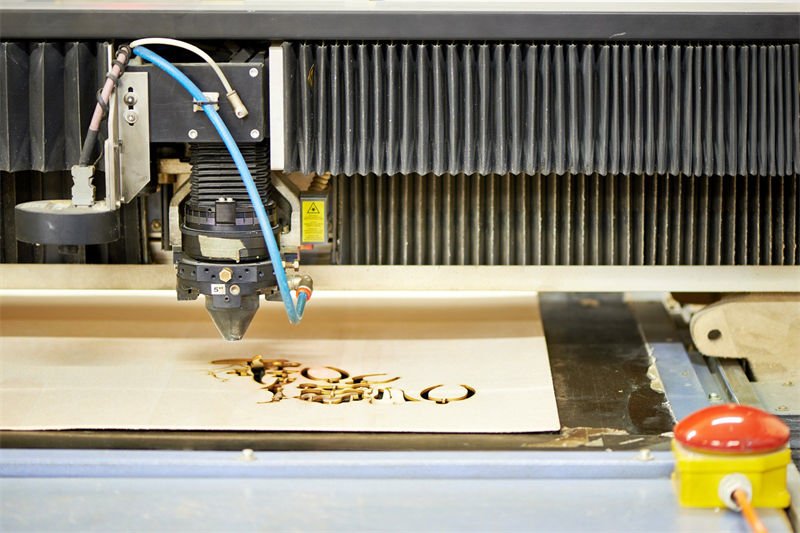
Laser cutting relies on concentrated light energy to cut through materials, and the power requirement is a critical factor in this process. The power of a laser cutter directly affects its ability to penetrate different materials, influencing both the speed and quality of the cut.
Power Requirements for Different Materials
Wood
Wood generally requires less laser power compared to metals. CO2 lasers, which are commonly used for cutting wood, typically operate at lower power levels. This is because wood can be effectively cut through burning and vaporization processes, which require less energy.
Metals
Metals, especially thicker or harder types, necessitate higher-powered lasers. Fiber lasers are often employed for metal cutting due to their ability to deliver high energy density. The higher power is crucial for melting the metal, which is then expelled by an assist gas. This makes fiber lasers ideal for achieving precise cuts in metals, despite their higher power consumption.
| Material | Laser Type | Typical Power Requirement |
|---|---|---|
| Wood | CO2 | Low to Medium |
| Metal | Fiber | High |
Efficiency and Cost Implications
Higher power lasers typically lead to increased energy consumption and operational costs. However, they also provide faster cutting speeds and the ability to cut thicker materials. This trade-off means that selecting the appropriate power level is essential for optimizing efficiency and cost-effectiveness in manufacturing processes.
Evaluating Power Needs3
When choosing a laser cutter, it’s important to evaluate your specific power needs based on the materials you plan to work with. Considerations include the material type, thickness, and desired cutting speed.
Understanding the role of power requirements in laser cutting helps in selecting the right equipment and settings to achieve optimal results. It’s not just about having enough power but about matching the power level to your specific application requirements.
CO2 lasers require more power for cutting wood.False
CO2 lasers need less power for cutting wood due to its properties.
Fiber lasers are ideal for cutting metals.True
Fiber lasers provide high energy density needed for metal cutting.
Why Is Assist Gas Important in Laser Cutting?
In laser cutting, assist gas plays a crucial role in ensuring precision and quality, especially when cutting metals.
Assist gas is essential in laser cutting to improve cutting speed, precision, and edge quality. It helps remove molten material from the cut area and prevents oxidation, particularly in metal cutting processes.

The Role of Assist Gas in Metal Cutting
In metal laser cutting, the assist gas is crucial as it directly influences the cutting quality and efficiency. The primary role of assist gas is to clear away the molten metal from the cutting kerf. This not only ensures a clean cut but also prevents the material from re-solidifying and affecting the cut line.
For metals, two commonly used assist gases are oxygen and nitrogen:
- Oxygen: Oxygen reacts with the metal to create an exothermic reaction that increases the cutting speed. However, this can lead to oxidation on the cut edges.
- Nitrogen: Used for non-ferrous metals, nitrogen acts as a shield to prevent oxidation, ensuring cleaner edges.
Assist gases also help in cooling the material and the cutting tool, thereby reducing thermal distortion.
Differences in Assist Gas Usage for Wood vs. Metal
When it comes to wood, compressed air is often used as an assist gas. The purpose is primarily to blow away smoke and debris rather than interacting with the material chemically. This contrasts significantly with metals, where the type of gas used can alter the chemical characteristics of the cut.
| Material | Common Assist Gas | Primary Function |
|---|---|---|
| Wood | Compressed Air | Smoke and debris removal |
| Metals | Oxygen/Nitrogen | Molten material removal and edge quality enhancement |
Impact on Edge Quality and Speed
The choice of assist gas can dramatically affect edge quality and cutting speed:
- Edge Quality: Using nitrogen results in high-quality edges without oxidation marks, making it ideal for aesthetic applications.
- Cutting Speed: Oxygen can enhance cutting speed due to its reactive properties, beneficial for thick ferrous materials.
Understanding the different roles of assist gases4 helps optimize laser cutting processes for various materials, enhancing both efficiency and output quality. By adjusting the type and pressure of assist gas, operators can fine-tune their machines for specific tasks and desired outcomes.
Nitrogen prevents oxidation in metal laser cutting.True
Nitrogen acts as a shield to prevent oxidation, ensuring cleaner edges.
Oxygen slows down the laser cutting speed.False
Oxygen increases the cutting speed through an exothermic reaction with metals.
How Do Edge Quality and Speed Vary Between Materials?
Understanding how edge quality and speed differ between materials can optimize laser cutting processes.
Edge quality and speed vary significantly between materials due to their physical properties and how they interact with laser technology. Wood generally allows faster cuts with charred edges, while metals require slower, precise cuts with cleaner edges.
Impact of Material Properties on Edge Quality
The physical properties of materials5 like density, thermal conductivity, and melting points influence how lasers interact with them. Wood, being a softer and less dense material, tends to char at the edges due to its lower melting point and higher flammability. This charring occurs as the laser burns through the fibers, creating an aesthetically distinctive, though sometimes undesired, finish.
In contrast, metals have a much higher melting point and density, leading to cleaner edges when cut with a laser. The laser melts the metal, and the assist gas blows the molten material away, resulting in precise cuts. However, the specifics can vary based on the type of metal; for example, aluminum might require different settings compared to steel to achieve optimal edge quality.
| Material | Edge Quality | Reason |
|---|---|---|
| Wood | Charred | Lower melting point, burns easily |
| Metal | Cleaner | Higher melting point, precision cutting |
Variations in Cutting Speed
The speed at which materials can be cut6 also depends heavily on their properties and the laser type used. Wood generally allows for faster cutting speeds because it requires less energy to burn through compared to melting metals. This can be advantageous in high-volume production settings where efficiency is crucial.
However, when cutting metals, the speed must often be reduced to ensure precision and maintain edge quality. The type of metal plays a critical role here—non-ferrous metals like aluminum can often be cut faster than ferrous metals like steel due to their different thermal properties.
Considerations for Optimizing Laser Cutting
When selecting a material for laser cutting, it’s essential to consider both edge quality and speed. For applications where aesthetics are paramount, such as in custom furniture or art pieces, additional post-processing might be required to clean up charred edges on wood.
In industrial settings where precision is critical, like in automotive or aerospace manufacturing, optimizing for edge quality might mean adjusting speed and power settings for each type of metal used. The choice of assist gas—such as using nitrogen to prevent oxidation—can also play a significant role in achieving desired results.
By understanding these differences, users can better leverage laser cutting technology to suit their specific needs, ensuring both efficiency and quality in their projects.
Wood cuts faster but with charred edges.True
Wood is less dense and has a lower melting point, leading to faster cuts.
Metals require slower cutting speeds for cleaner edges.True
Metals have higher melting points, necessitating slower, precise cuts.
Conclusion
Understanding the nuances of laser cutting wood versus metals empowers me to make informed decisions in machinery and material choice. I’m excited to optimize efficiency and quality in my projects.
-
Learn how to ensure safe laser cutting environments.: Laser Cutters Should Not Be Used on Wooden Surfaces. Properly mount laser cutters on a firm, non-flammable surface such as a concrete or steel … ↩
-
Explore diverse applications suited for each laser type.: Fiber lasers provide higher cut precision than CO2. They have 10 times the working life of CO2 devices, often reported as 25,000 working hours. ↩
-
Learn how to select laser cutter power based on material requirements.: The laser cutter power, measured in watts, determines the machine’s ability to cut through materials of different thicknesses. ↩
-
Discover how assist gas enhances laser cutting efficiency and quality.: An assist gas is a secondary stream of an inert or non-reactive gas used in combination with the primary CO2 laser beam during laser cutting operations. ↩
-
Discover how material properties impact laser cutting outcomes.: Materials with high thermal conductivity dissipate heat rapidly during cutting. While this can affect the edge quality, especially in terms of … ↩
-
Learn about factors affecting cutting speed differences.: The proper cutting speed for the majority of ferrous metals is under 300 FPM. The proper cutting speed for the majority of wood cuts is over 3000 FPM. ↩