

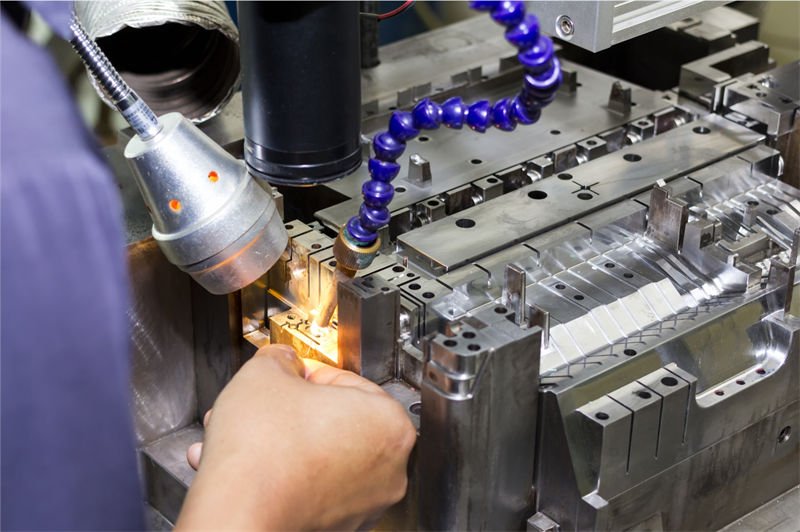
Have you ever wondered how those nifty little machines—desktop laser welders—actually work? Let me take you on a journey into their fascinating world.
Desktop laser welding machine generates a laser beam with high energy density and focuses it on the surface of the weldment through an optical focusing system. Laser energy causes the weldment to rapidly heat up and melt locally. In an environment protected by gas to prevent oxidation, a firm weld seam is formed after cooling. When working, prepare the weldment first, adjust parameters such as power and speed. After completion, check the weld seam quality.
While the basic operation may seem straightforward, the intricate design and versatility of desktop laser welders hold so much more value. Stick around as we delve into their comprehensive features, benefits, and how they stand out compared to traditional welding methods.
Desktop laser welders offer high precision with minimal heat impact.True
They use advanced control systems to achieve precise welds with minimal distortion.
What Are the Key Components of a Desktop Laser Welder?
Discover the crucial elements that make desktop laser welders a powerful tool for precision welding.
Key components of desktop laser welding machine: first, laser generator, such as fiber and CO₂ laser, generates laser beam. Second, optical focusing system uses lenses to focus laser. Cooling system ensures equipment does not overheat. Motion control system manipulates the movement of welding head or workpiece. There is also a protective gas system that delivers gas through pipes and valves to prevent oxidation of the workpiece.
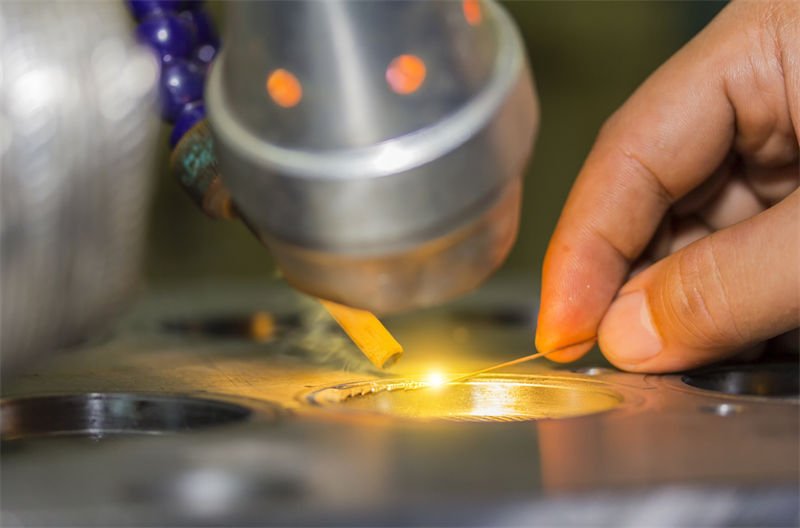
Laser Source
The heart of any desktop laser welder is its laser source1. Depending on the model and application, this could be a fiber laser, diode laser, or another type. The laser source generates the concentrated light beam necessary for melting and joining materials. Its type and power output determine the welder’s capabilities, affecting factors like penetration depth and welding speed.
Optical Focusing System
The optical focusing system2 is crucial for directing the laser beam precisely onto the material. It typically includes lenses or mirrors to focus the light accurately. This system ensures that the energy is concentrated on a small area, allowing for fine, detailed welds with minimal distortion or heat-affected zones.
Control Panel
A user-friendly control panel3 is essential for adjusting the laser welder’s parameters. Operators can tweak settings such as laser power, pulse duration, and welding speed. This adaptability is vital for handling different materials and thicknesses, ensuring optimal results for each project.
| Parameter | Function |
|---|---|
| Laser Power | Determines penetration depth |
| Pulse Duration | Controls energy delivery time |
| Welding Speed | Affects seam quality and speed |
Protective Gas System
The protective gas system is an important part of the desktop laser welding machine. It is mainly composed of a gas storage device, a conveying pipeline and valves. The storage device stores gases such as argon and nitrogen. During operation, the gas is transported through pipelines and the flow is precisely controlled by valves. It is ejected during welding to effectively isolate air and prevent oxidation of the weldment.
Integrated Worktable
The integrated worktable or fixture holds the materials in place during welding. Some models come with adjustable fixtures or jigs to accommodate various shapes and sizes of workpieces. This component ensures stability and precision throughout the welding process, enhancing overall accuracy.
Versatility and Add-Ons
Many desktop laser welders offer additional features to enhance their versatility. For example, some units allow switching between continuous and pulsed welding modes. Others may be compatible with different types of fixtures to handle unique welding challenges. The ability to adapt to various tasks makes these welders suitable for a wide range of applications, from jewelry making to electronics manufacturing.
Desktop laser welders use a fiber laser source.True
Fiber lasers are common in desktop welders for their precision.
Optical focusing systems decrease welding precision.False
Optical systems enhance precision by focusing the laser accurately.
How Do Desktop Laser Welders Compare to Traditional Welding Methods?
Desktop laser welders are transforming the welding landscape with precision and versatility. How do they stack up against traditional methods?
Compared with traditional welding, desktop laser welding machines have faster speed and higher efficiency; the precision can reach below 0.1 millimeter, which is difficult for traditional welding to guarantee; the heat-affected zone is small, and the workpiece deformation is small; the weld seam is beautiful; it has a wide range of applicable materials; it has low energy consumption and is environmentally friendly. However, laser welding machines are expensive and have high operation requirements, while traditional welding equipment is cheap and the operation is simple.
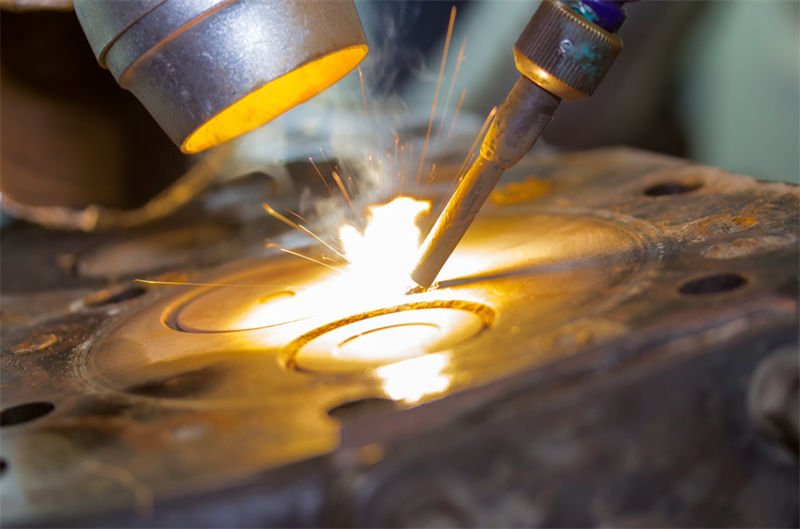
Precision and Control
Desktop laser welders excel in delivering precise welds due to their advanced control systems. Unlike traditional welding methods4, which often rely on the welder’s skill to manage heat input and weld size, laser welders allow for fine-tuning of parameters such as laser power and pulse duration. This results in minimal heat distortion, making them ideal for delicate applications like electronics or jewelry manufacturing.
Versatility in Applications
While traditional welding methods like MIG or TIG are versatile in handling different materials, desktop laser welders offer a distinct advantage with their ability to easily switch between welding modes, such as continuous or pulsed. This adaptability is particularly beneficial in settings where different welding requirements must be met quickly and efficiently.
| Feature | Desktop Laser Welder | Traditional Welding |
|---|---|---|
| Precision | High precision with minimal heat impact | Dependent on welder’s skill |
| Heat Affected Zone | Minimal | Larger and varies |
| Ease of Use | User-friendly with intuitive interfaces | Requires skilled operators |
| Setup and Space | Compact, desktop-sized | Larger, more setup space required |
Space and Cost Efficiency
One of the major benefits of desktop laser welders is their compact size and cost-effectiveness. Traditional welding setups can require significant space and investment in infrastructure, whereas desktop models fit neatly into smaller workspaces and come at a fraction of the cost. This makes them highly appealing to small businesses and startups.
Environmental Considerations
Desktop laser welders also tend to produce fewer emissions and less waste than traditional methods, which often involve consumables like gas tanks or welding rods. This not only reduces the environmental impact but also cuts down on operational costs related to material procurement and disposal.
To explore more about how these differences affect specific industries and operations, consider looking at comparisons between desktop laser welding5 technologies and traditional alternatives.
Desktop laser welders are more precise than traditional methods.True
Desktop laser welders offer high precision with minimal heat impact.
Traditional welding is more space-efficient than desktop laser welding.False
Desktop laser welders are compact, requiring less space than traditional setups.
What Are the Advantages of Using a Desktop Laser Welder?
Desktop laser welders are transforming small-scale manufacturing with their compact size and precision capabilities.
Desktop laser welding machines have many advantages. They have high precision up to micron level and are suitable for precision parts. The welding speed is fast, improving production efficiency. The heat affected zone is small, reducing workpiece deformation. The weld seam is of high quality and beautiful, reducing subsequent processes. They are applicable to a wide range of materials. They are also energy-saving and environmentally friendly, requiring no welding materials, with low energy consumption and no pollution.

Space-Saving Design
One of the most significant advantages of a desktop laser welder6 is its compact footprint. Unlike traditional industrial welding machines, these devices are designed to fit comfortably on a tabletop or within limited workspace environments, making them ideal for small workshops or laboratories.
The compact design doesn’t compromise on functionality, as desktop models integrate all essential components into a single unit. This efficiency helps maximize productivity in spaces where every square foot counts.
Cost-Effectiveness
Desktop laser welders provide a cost-effective solution for businesses needing precise welding capabilities without the financial burden of large-scale systems. They are generally more affordable than their industrial counterparts, making them an attractive option for startups, research institutions, and small businesses operating under budget constraints.
Their lower maintenance costs further enhance their economic appeal. Regular maintenance, as outlined in the maintenance guide7, ensures longevity and reduces the need for costly repairs.
| Feature | Desktop Laser Welder | Industrial Laser Welder |
|---|---|---|
| Size | Compact | Large |
| Cost | Lower | Higher |
| Maintenance Cost | Lower | Higher |
Precision and Control
A hallmark of desktop laser welders is their precision. The ability to adjust parameters like laser power, pulse duration, and welding speed allows users to execute intricate welds with minimal heat-affected zones. This is particularly advantageous in industries such as jewelry making and electronics manufacturing, where fine detail is crucial.
The intuitive control panels make these machines accessible to operators who may not have extensive training, thus lowering the barrier to entry for small businesses looking to adopt advanced welding technology.
Versatility
Despite their small size, desktop laser welders are versatile. Some models offer features like interchangeable welding modes—continuous or pulsed—that accommodate various materials and applications. They also often support different fixtures or jigs to hold uniquely shaped workpieces securely during the welding process.
This versatility extends the range of projects that can be undertaken with a single machine, adding value for users who require flexibility in their operations.
Desktop laser welders are more affordable than industrial ones.True
Desktop models are generally cheaper and have lower maintenance costs.
Industrial laser welders fit comfortably on a tabletop.False
Industrial welders are large and not designed for limited spaces.
How Should You Maintain a Desktop Laser Welder for Longevity?
Ensuring your desktop laser welder remains in top condition is key to maximizing its lifespan and performance.
To maintain a desktop laser welder, perform daily cleaning, regularly check optical and mechanical components, inspect electrical systems, and consider professional inspections periodically. Proper care helps avoid equipment failures and extends the machine’s lifespan.
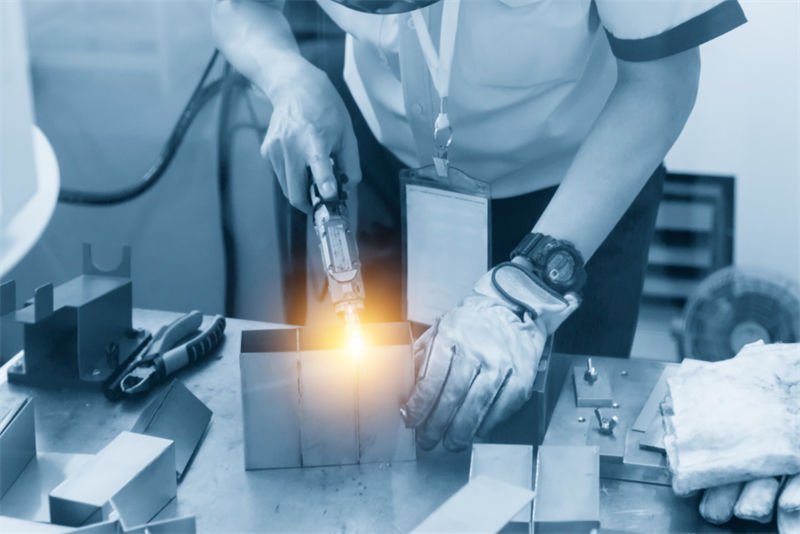
Daily Cleaning Practices
Keeping the workspace around your desktop laser welder clean is crucial to prevent dust and debris from affecting its performance. After each use, ensure that the work area is free from contaminants. Using an air purifier or vacuum cleaner near the machine can help minimize airborne particles.
Optical System Maintenance
The optical system, including the laser head and lenses, requires meticulous care. Before each session, inspect these components for dust or smudges. Use a blower to remove loose particles and a lens cleaning kit for thorough cleaning. Consistent maintenance of these parts ensures high-quality welds.
Mechanical Component Check-ups
Regularly inspect the workbench for wear or damage. If scratches appear, smooth them with fine sandpaper. Additionally, lubricate guide rails and sliders as per the equipment manual. This practice ensures smooth movement and accurate welding.
Electrical System Inspection
Check the power supply’s stability using a voltmeter and address any fluctuations promptly with a voltage regulator. Inspect cables for signs of wear, replacing them if necessary. Also, ensure that circuit boards remain dust-free to prevent overheating.
Gas System Care (if applicable)
For welders with gas protection features, verify gas cylinder pressure and check for tube leaks using soapy water. Clean out impurities from tubes regularly to maintain purity and smooth gas flow.
Professional Inspections
Every six months to a year, have a professional conduct an in-depth inspection. They can accurately calibrate the laser power and inspect electrical systems comprehensively, identifying potential issues early on.
By adhering to these maintenance practices, you can significantly extend your desktop laser welder’s lifespan, ensuring consistent performance over time.
Daily cleaning prevents laser welder performance issues.True
Regular cleaning removes dust and debris, ensuring optimal function.
Skipping professional inspections extends welder lifespan.False
Professional checks identify and fix potential issues early, extending life.
Conclusion
Desktop laser welders are game-changers for small workshops, offering precision and versatility. With proper maintenance, they can serve you well for years to come. Consider incorporating this technology for your welding needs!
-
Learn about the various laser sources for tailored welding needs.: This page introduces typical lasers used for laser welding, including gas (CO2), solid (YAG), fiber, disk, and semiconductor lasers. ↩
-
Discover how these systems enhance precision in welding.: A non-intrusive optical sensor system has been developed for focus control of laser welding. This detects the light generated by the process through the laser … ↩
-
Explore how control panels optimize welding operations.: The laser welding machine also includes a user-friendly control panel for easy adjustments and safety features such as an interlock system and an emergency … ↩
-
Explore detailed comparisons of laser vs traditional welding techniques.: Though the initial investment is high, the process proves to be more cost-effective than traditional welding. Laser welding offers a faster processing speed … ↩
-
Learn about the diverse applications of desktop laser welding.: Laser welding is frequently used in high volume applications such as in the automotive and medical industries. Laser Welding, Laser Microwelding. Laser Welding. ↩
-
Learn how compact design enhances productivity in limited spaces.: The laser beam quality is good, the welding speed is fast, and the welding seam is solid and beautiful. It provides users with efficient and … ↩
-
Discover effective maintenance strategies for prolonged welder lifespan.: 1. Regular Cleaning: Ensure that the laser welding machine is clean and free from dust, debris, and any other contaminants. ↩