


Ever watched a laser beam dance across a surface, leaving behind a perfect mark? It’s mesmerizing! But what truly makes laser marking machines so efficient?
Laser marking machines operate efficiently by using concentrated beams of light to mark materials quickly and permanently. Their efficiency is determined by the type of laser used, such as CO2, Fiber, or UV, each offering distinct advantages for specific materials.
While this snippet provides a quick overview, understanding the nuanced differences between laser types can significantly impact your choice. Read on to discover how these machines achieve such remarkable efficiency and which one might be right for your needs.
Fiber lasers are ideal for marking non-metal materials.False
Fiber lasers excel in marking metals and hard plastics, not non-metals.
What Are the Different Types of Laser Marking Machines?
Navigating the world of laser marking machines can be daunting. Let’s explore the different types and their unique capabilities.
Laser marking machines come in three main types: CO2, Fiber, and UV. CO2 lasers are best for non-metals like leather and fabric. Fiber lasers excel in marking metals and hard plastics, while UV lasers offer ultra-fine marking for nearly all materials.

CO2 Laser Markers
CO2 laser markers utilize high-quality CO2 RF laser tubes, allowing for impressive marking speeds reaching up to 7,000 mm per second. These machines are particularly suitable for non-metal materials such as paper packaging, plastic products, leather, and fabric. The advantage of CO2 lasers lies in their ability to deliver high-speed efficiency without compromising on quality.
| CO2 Laser Applications | Suitable Materials |
|---|---|
| Packaging | Paper, cardboard |
| Fashion Accessories | Leather, fabric |
| Product Design | Wood, acrylic |
CO2 lasers are ideal for industries that require high-speed marking on softer materials, ensuring quick turnover without sacrificing precision.
Fiber Laser Markers
Fiber laser markers are gaining popularity due to their versatility and decreasing costs. They employ imported lasers combined with a high-speed galvo scanning system and professional laser marking software. These machines are compact and feature integrated air-cooling systems.
Fiber lasers are adept at marking metals and most hard plastics, offering deep engravings and permanent marks. The precision they provide makes them a popular choice in industries like automotive and aerospace.
UV Laser Markers
UV laser markers are equipped with a UV laser and an imported high-speed scanning system. They excel in ultra-fine marking with minimal thermal effect, making them suitable for materials that require high precision and fine processing.
These lasers can mark nearly all materials, including plastics and glass, providing a cleaner finish than other types. Their versatility makes them the go-to choice for applications needing meticulous detail, such as electronics and medical devices.
The unique capabilities of each laser type highlight the importance of aligning your choice with your specific application needs and budget. Understanding these differences will ensure you select the optimal laser marking machine for your business operations.
CO2 lasers are suitable for metal marking.False
CO2 lasers are best for non-metals like leather and fabric.
UV lasers offer ultra-fine marking for all materials.True
UV lasers can mark nearly all materials with high precision.
How Do CO2 Laser Markers Achieve High-Speed Efficiency?
CO2 laser markers are renowned for their incredible speed and efficiency, especially in processing non-metal materials. But how do they achieve this level of performance?
CO2 laser markers achieve high-speed efficiency through the use of RF-excited laser tubes and advanced galvo systems, allowing them to mark materials at speeds up to 7,000 mm per second. This is facilitated by their ability to rapidly focus and deflect the laser beam across the material surface, ensuring precise and quick marking.

Understanding CO2 Laser Technology
CO2 laser markers utilize radio frequency (RF) excited laser tubes, which are crucial for their high-speed performance. These tubes generate a laser beam by electrically stimulating a mixture of gases, primarily carbon dioxide, nitrogen, and helium. The interaction of these gases creates a powerful beam that can be directed with precision.
The laser beam produced is in the infrared spectrum, typically around 10.6 micrometers in wavelength. This wavelength is particularly effective for non-metallic materials like wood, leather, and acrylic. The long wavelength allows the laser to penetrate and mark these materials efficiently without causing excessive heat damage.
Galvanometer Scanning Systems
A key component contributing to the efficiency of CO2 laser markers is the galvanometer scanning system. This system consists of two mirrors mounted on high-speed motors that can precisely and rapidly position the laser beam on the material surface.
This setup enables the laser to reach speeds up to 7,000 mm per second, as it can quickly adjust the path of the laser beam without moving the entire laser unit or the workpiece. This not only speeds up the marking process but also increases precision, as the laser can make quick and sharp turns.
Software and Control Systems
The software used in CO2 laser marking machines is designed to optimize both speed and quality. It allows users to upload designs and control parameters such as speed, power, frequency, and focus distance.
The software works in tandem with hardware components to minimize downtime and maximize throughput. By adjusting these parameters, operators can achieve high-speed marking while maintaining high-quality results.
| Feature | Benefit |
|---|---|
| RF-excited Laser Tubes | High power efficiency |
| Galvanometer System | Rapid beam deflection for speed |
| Advanced Software | Customizable settings for precision |
Applications in Industry
CO2 laser markers are particularly favored in industries requiring rapid and efficient marking of large batches of products. Industries such as packaging, textiles, and automotive often employ these machines for applications like barcoding, serial numbering, and decorative marking.
Their ability to work swiftly and continuously with minimal maintenance makes them ideal for high-volume production environments where time is critical.
By understanding these technological elements, you can see why CO2 laser markers are an excellent choice for businesses seeking efficient and reliable marking solutions on non-metal materials.
CO2 laser markers use RF-excited tubes for high speed.True
RF-excited tubes generate powerful beams quickly for efficient marking.
Galvo systems in CO2 lasers slow down the marking process.False
Galvo systems enhance speed by rapidly positioning the laser beam.
Why Are Fiber Lasers Becoming the Mainstream Choice?
Fiber lasers are emerging as the favored option in various industries. What drives this preference?
Fiber lasers are becoming mainstream due to their versatility, efficiency, and decreasing costs. These lasers excel in marking metals and hard plastics, offering fast and precise results with minimal maintenance. Their compact design and air-cooling systems further enhance their appeal across multiple applications.
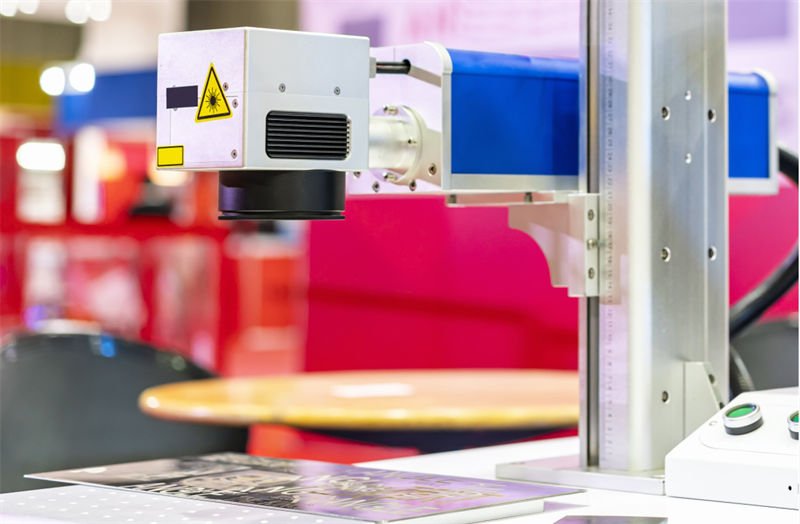
Advantages of Fiber Lasers
Fiber lasers have gained popularity for several compelling reasons. Firstly, they are incredibly versatile. Capable of marking both metals and hard plastics, these lasers meet the demands of diverse industries, from automotive to electronics. Their ability to deliver high-quality marks on challenging surfaces sets them apart from other laser types.
Another key advantage is efficiency. Fiber lasers offer faster marking speeds without compromising on quality. This efficiency is attributed to their use of a high-speed galvo scanning system, which ensures rapid and accurate laser beam positioning. As a result, production cycles are shortened, boosting overall productivity.
Moreover, fiber lasers are known for their low maintenance requirements. Unlike CO2 or UV lasers, fiber lasers have fewer moving parts and do not rely on expensive consumables like gas or crystals. This translates to lower operational costs and reduced downtime.
Cost and Accessibility
The cost-effectiveness of fiber lasers has played a pivotal role in their rising popularity. As technological advancements drive down the price of fiber laser components, more businesses can afford to integrate them into their operations. The initial investment is offset by long-term savings in maintenance and energy costs, making fiber lasers an attractive option for businesses looking to optimize their budget without sacrificing quality.
Additionally, the compact design of fiber lasers allows for easy integration into existing workflows. Their space-saving nature is particularly beneficial in industries where floor space is at a premium. Coupled with an efficient air-cooling system, fiber lasers operate smoothly in various environments, enhancing their usability.
Technological Advancements and Future Trends
The future of fiber lasers looks promising, thanks to ongoing technological advancements. Innovations in laser technology continue to enhance their capabilities, offering even greater precision and efficiency. For instance, developments in laser software enable more complex designs and patterns, expanding the potential applications of fiber lasers.
Furthermore, as industries place greater emphasis on sustainability and eco-friendliness, fiber lasers align well with these goals. Their energy-efficient operation and reduced environmental impact make them a forward-thinking choice for companies committed to sustainable practices. As demand for environmentally responsible solutions grows, fiber lasers are poised to become an even more integral part of industrial processes.
In conclusion, while fiber lasers1 are not the only option available, their unique benefits make them an increasingly popular choice across various sectors. Their versatility, cost-effectiveness, and alignment with future industry trends underscore their role as the preferred choice for laser marking applications.
Fiber lasers are more efficient than CO2 lasers.True
Fiber lasers have faster marking speeds and lower maintenance costs.
Fiber lasers require expensive consumables like gas or crystals.False
Fiber lasers have fewer moving parts and do not rely on consumables.
When Should You Opt for a UV Laser Marker?
UV laser markers are the epitome of precision in laser marking, but when are they truly the best option for your business needs?
You should opt for a UV laser marker when you require ultra-fine marking on delicate materials. Its low thermal impact makes it ideal for plastics, glass, and sensitive substrates where precision is paramount without damaging the material.

Understanding UV Laser Technology
UV laser markers utilize ultraviolet light to achieve ultra-fine marking with minimal thermal impact. This characteristic distinguishes them from other laser types, making them suitable for high-precision applications. Their unique mechanism2 is particularly beneficial for industries like electronics and pharmaceuticals, where intricate detailing is essential.
Optimal Materials for UV Laser Marking
Unlike CO2 or fiber lasers, UV lasers excel in marking materials that are prone to heat damage. This includes:
- Plastics: The low thermal impact ensures no deformation or burning.
- Glass: Achieve crisp, clear marks without causing cracks or chips.
- Ceramics and Silicon Wafers: Perfect for electronic components where precision is crucial.
UV laser markers are unparalleled when marking materials with complex geometries or fine details, ensuring the integrity of the substrate is maintained.
Applications That Benefit from UV Lasers
Industries opting for UV laser markers often require fine detailing and minimal material alteration. Common applications include:
- Medical Devices: Ensures high-quality, readable marks without compromising device integrity.
- Cosmetic Packaging: Achieves intricate designs on delicate materials.
- Solar Panels: Ideal for marking photovoltaic cells due to its non-invasive nature.
Moreover, UV lasers are indispensable for marking materials like polycarbonate or polyethylene, where other laser types may fall short.
Cost Considerations and Efficiency
While UV laser markers tend to be pricier, their efficiency in producing high-quality marks often justifies the investment. They operate with lower power consumption3 compared to other laser types due to their precise beam control, translating into long-term savings.
| Material | Best Laser Type |
|---|---|
| Metals | Fiber |
| Plastics | UV |
| Wood | CO2 |
| Glass | UV |
| Ceramics | UV |
In summary, the decision to opt for a UV laser marker should consider the specific material requirements and the precision needed for your applications. The advantages of minimal thermal impact and superior mark quality make UV lasers a worthy investment for businesses focused on delicate and high-precision materials.
UV lasers are ideal for marking metals.False
Fiber lasers are better suited for marking metals due to their efficiency.
UV lasers consume less power than CO2 lasers.True
UV lasers operate with lower power consumption, enhancing efficiency.
Conclusion
Choosing the right laser marking machine involves understanding different types and their efficiencies. Reflect on your material needs and budget to make an informed decision that can transform your manufacturing process.
-
Explore detailed comparisons of fiber lasers with other laser types.: UV lasers provide the most contrast on resins. UV lasers have the added benefit of creating damage-free marks. CO2 lasers burn the target with heat, making them … ↩
-
Discover how UV lasers ensure ultra-fine precision without damaging materials.: As a result, they create precise and minimal-heat markings which further results in ultra-fine, high-quality marks, ideal for delicate materials and precision- … ↩
-
Learn about the energy efficiency of UV lasers compared to others.: UV lasers work a little differently to CO2 or Fibre as they do not damage the materials surrounding surface, using a far lower power form of marking. ↩